











MEDIUM-TERM VISION

Our Medium-Term Vision Formulation
We have formulated a medium-term vision and are aiming to achieve it by the early 2030s.
The Background Behind Our Vision
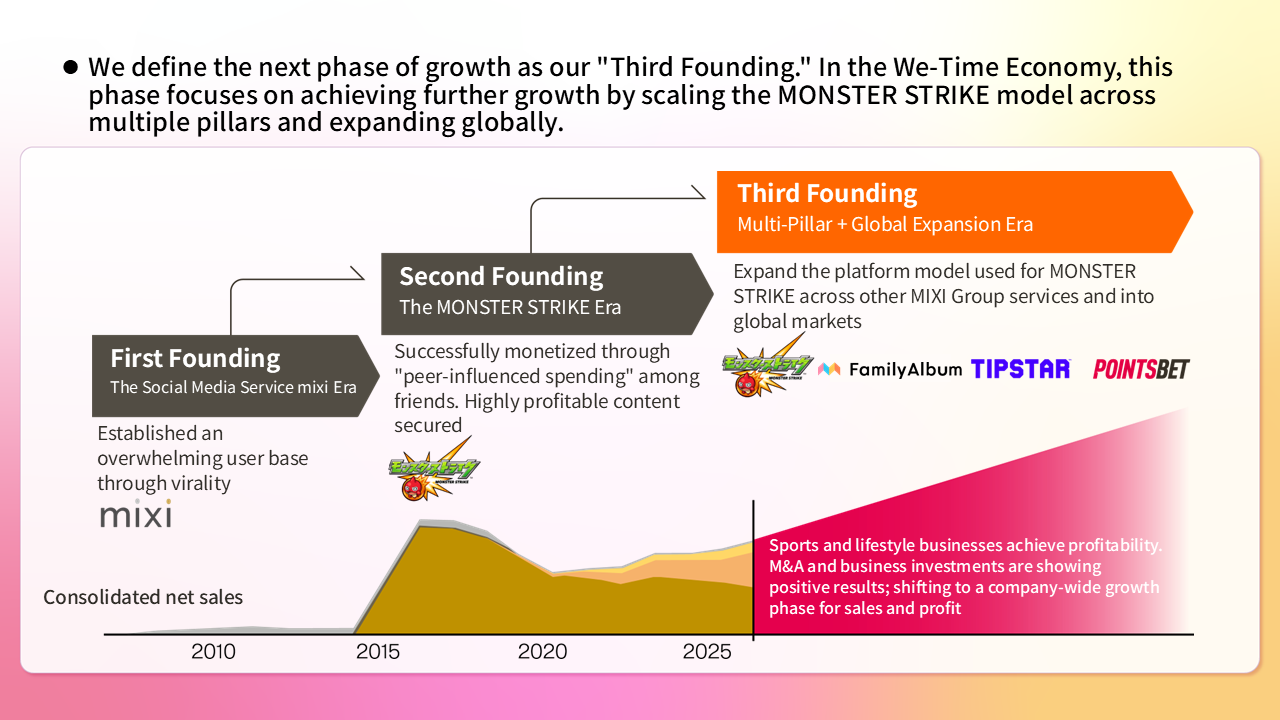
The First Founding phase was the launch of the social network mixi and the Second Founding phase was the debut of MONSTER STRIKE. Now, in our Third Founding phase, we are accelerating multiple business pillars and global expansion. Since the founding of our company, we have operated businesses in areas where communication between family and friends takes place. We have defined this economic sphere as the “We-Time Economy.” Looking forward, we plan to take the “model of shared experiences connecting people” which was established with MONSTER STRIKE and expand it horizontally across the entire MIXI Group as well as globally to achieve our medium-term vision with the aim of further growth in the early 2030s.
Medium-Term Vision: Growth Strategy in the We-Time Economy
The Rising Value of We-Time in the AI Era
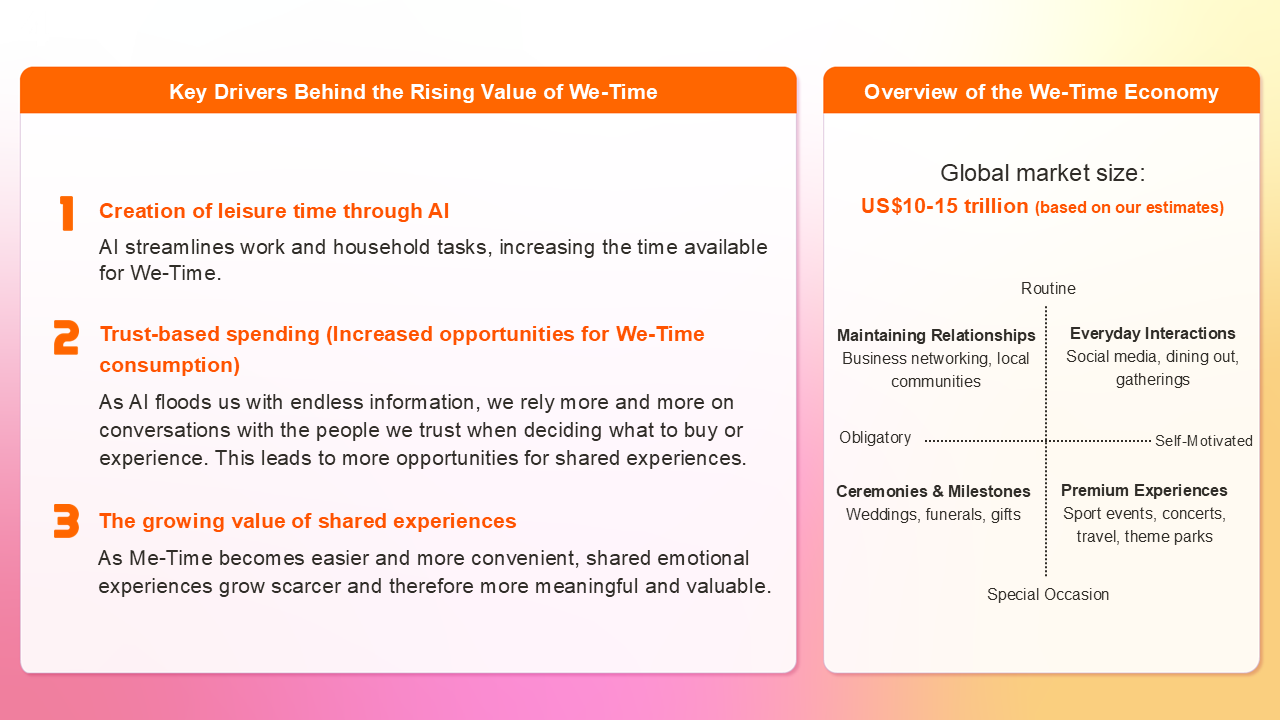
Taking advantage of the increase in free time caused by advanced AI and digital technology, MIXI is focusing on the human connections and spending generated by fun shared experiences. Although shared experiences are becoming increasingly scarce in the AI era, we will accelerate value creation by leveraging our strengths in the massive $10+ trillion global “We-Time Economy.”
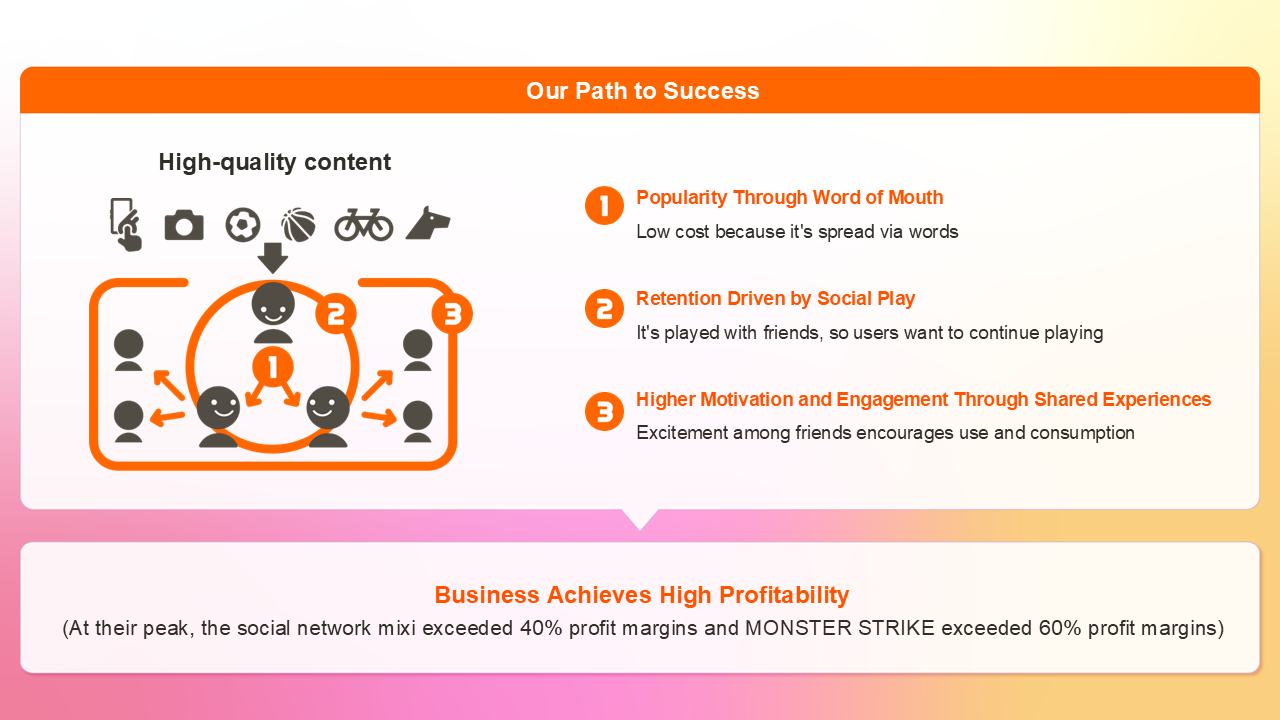
Our Path to Success in the We-Time Economy
By combining appealing content with social networks, we will achieve low-cost organic diffusion through word-of-mouth, higher long-term engagement through playing with family and friends, and increased usage and spending through fun shared experiences. Validated by mixi and MONSTER STRIKE at their peaks, this high-profit structure is our core competitive advantage in the We-Time Economy.
Business Portfolio and Growth Strategy in the We-Time Economy
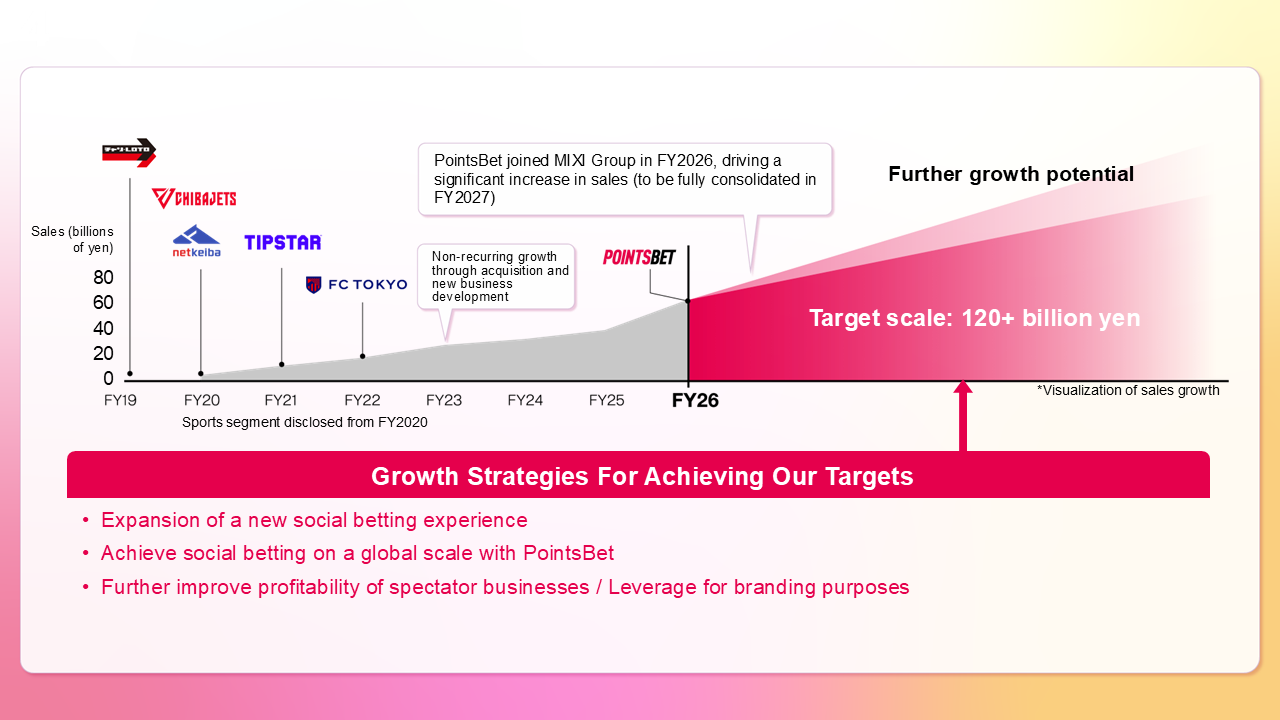
Sports Segment
In the Sports segment, we aim for net sales of 120 billion yen or more. In Japan, we will expand new betting experiences (social betting) centered around TIPSTAR. We will also expand into the global market through collaboration with PointsBet Holdings Limited. Furthermore, we will accelerate growth by improving the profitability of our spectator businesses and utilizing branding.
Lifestyle Segment
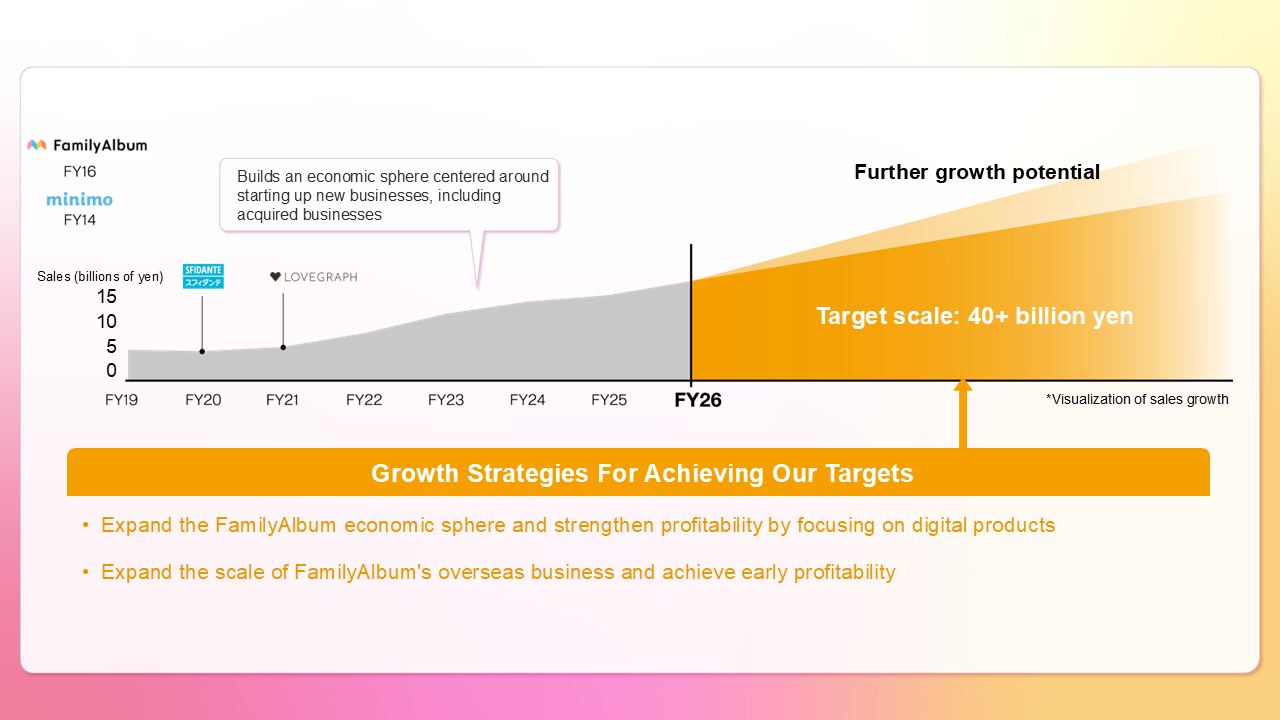
In the Lifestyle segment, we aim for net sales of 40 billion yen or more, centered around FamilyAlbum. We will strengthen profitability by focusing on digital products such as Premium plans and advertising, while also promoting the expansion of business scale and early monetization in overseas markets.
Digital Entertainment Segment
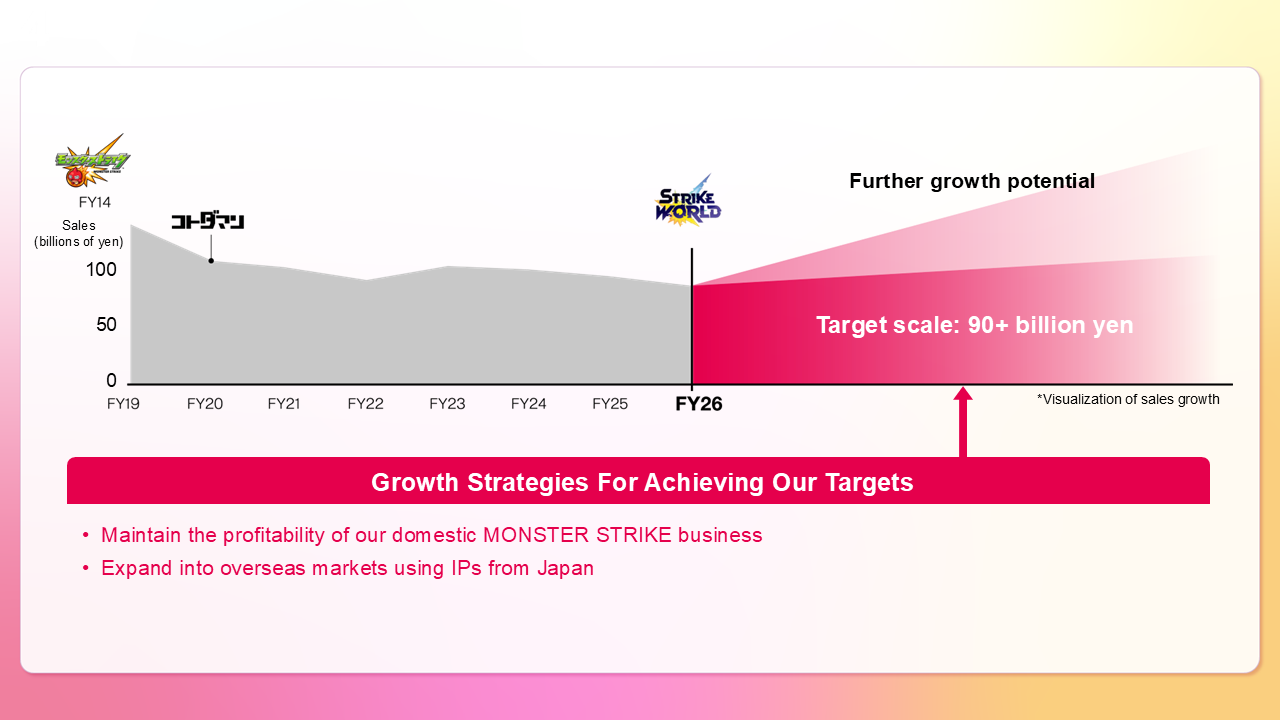
In the Digital Entertainment segment, we will work to extend the longevity of MONSTER STRIKE in Japan and maintain high profit levels, aiming for a net sales level of 90 billion yen or more. At the same time, we will take on the challenge of entering overseas markets and creating new hit content by developing STRIKE WORLD for the Indian market and collaborating with Japanese IPs.
Financial Targets and Financial/Governance Policies
Financial Targets for the Early 2030s
We set the achievement of 300 billion yen in net sales, a 20% EBITDA margin, and 15% ROE by the early 2030s as our priority goals.
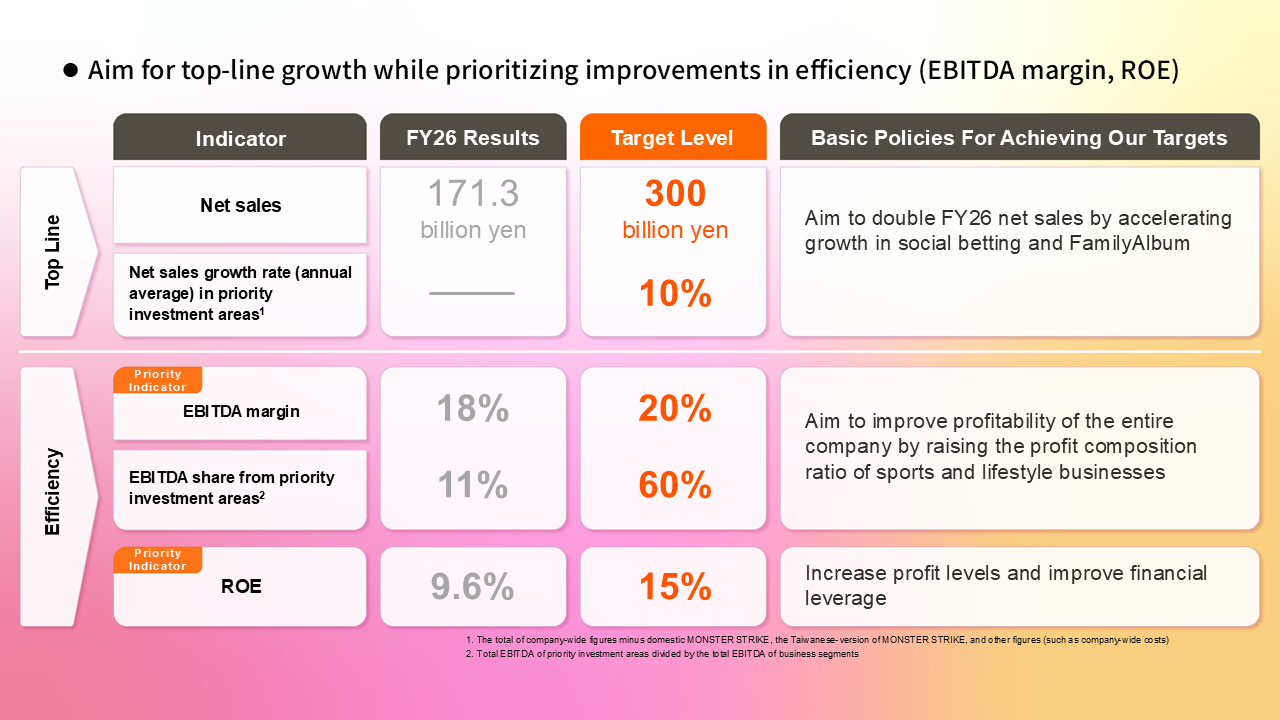
• The 50 billion yen difference between the 300 billion yen net sales target and the 250 billion yen segment-specific net sales target will be bridged through means such as new initiatives and upside from existing businesses.
Capital Allocation Policies
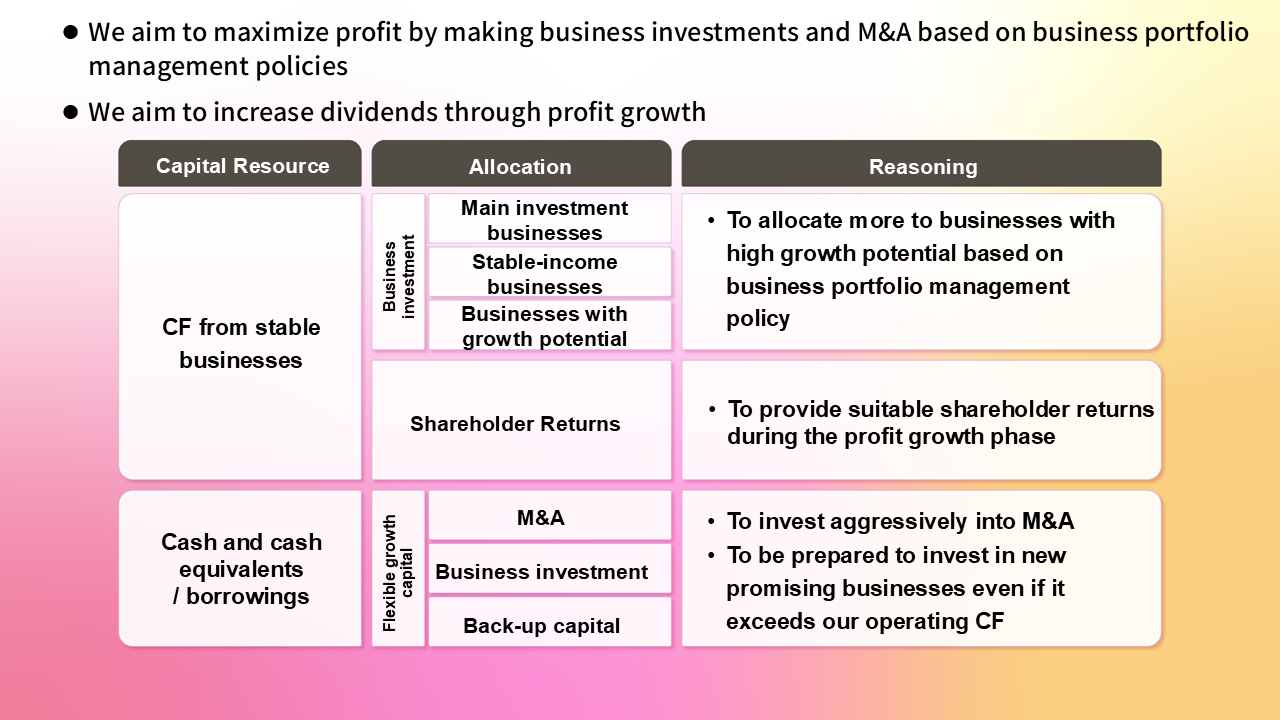
Based on our business portfolio management policy, we will actively allocate capital to businesses with high growth potential and M&A, aiming to maximize profits. In addition, we will work to strengthen shareholder returns in line with profit growth.
Our Approach to Business Portfolio Management
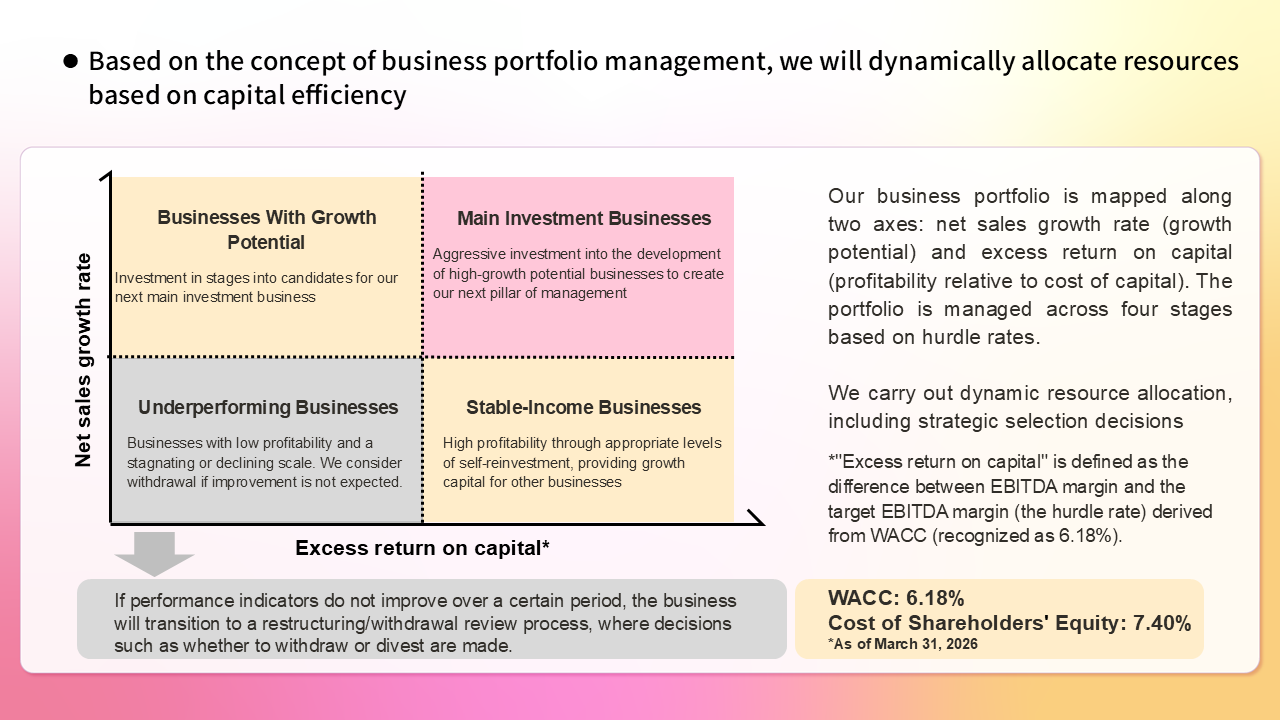
Our businesses are mapped along two axes: “net sales growth rate” and “excess return on capital.” We classify our businesses into four quadrants (main investments, expected growth potential, stable income, and underperforming), and perform dynamic resource allocation. Based on this classification, we clarify investment priorities and strictly follow the reorganization and withdrawal consideration process for businesses that do not meet certain criteria.
Shareholder Return Policy
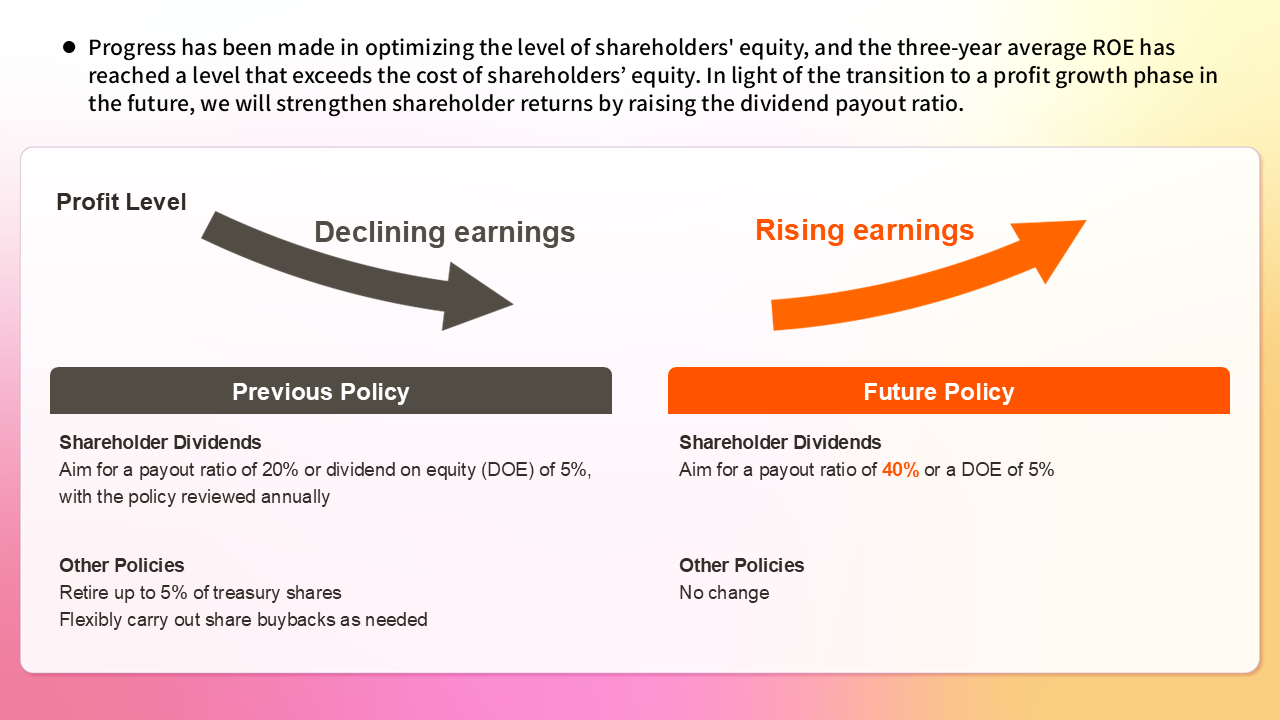
From FY2027, while maintaining the existing 5% DOE standard, we will raise the target dividend payout ratio from 20% to 40% to more directly reflect profit growth in shareholder returns.
Strengthening of Governance
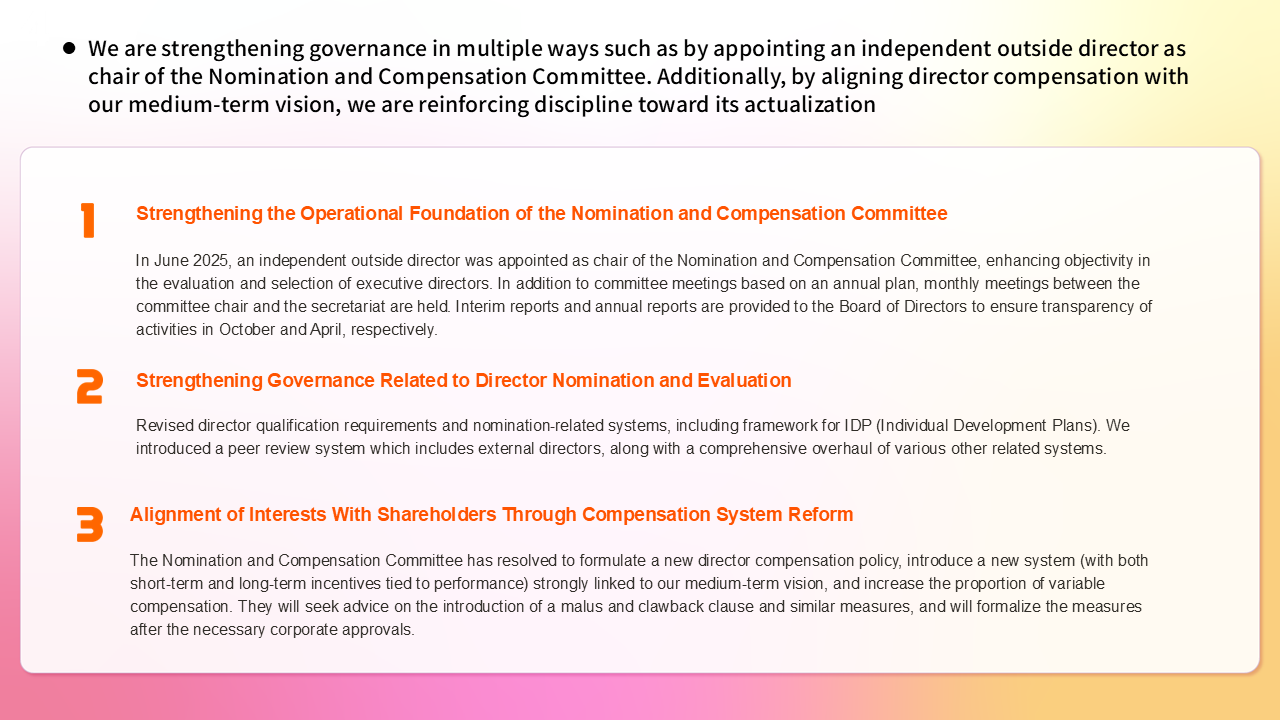
To realize our medium-term vision with discipline, we are enhancing the effectiveness of governance related to the nomination and compensation of directors.